Join Us
Sign up to stay informed of the latest news from Cristianime i Justícia.
Christianity, which is the following of Christ, consists of an entire life which is converted into a true sacrifice. This is not reduced to acts which are properly “religious”, like prayer or the sacraments, but rather the entire existence of the Christian should be converted into a form of living for God. Secularity, understood as the human and mundane condition of our life, is the substance of living as a Christian. In order to become conscious of it, two Ignatian contemplations (that of the hidden life of Jesus and that of the Contemplation to Obtain Love) can help us. By examining the years of the ordinary life of Jesus, we contemplate a simply human way of living with openness to the Father in the midst of other people. In the Contemplation to Obtain Love, we possess a mystagogy to live the opaqueness of the human and mundane with all of the mystical richness of the humanity of Christ. What this Pamphlet proposes is to live these two meditations unified as one.
In the face of the hells created by violence, oppression, and repression, the victims of injustice seem to have no other alternative than fight (action-reaction) or flight (silent submission). This booklet explores the “third way” of Jesus, which goes far beyond those two options. This “third way” is the path of active non-violence, a path that requires great lucidity, creativity, faith, and constancy. It comes out of a long biblical tradition, and it acquires special meaning in the context of our present-day society. [In addition to the translation into Catalan and Spanish that you can find on this website, the text has been translated into German, which you can find at this link].
Often we come to the Exercises thinking about ourselves, perhaps even a bit anguished at what we believe might turn into a new inspection of our interior lives. If this is the case with you, then you will certainly be relieved to know that the focus of the points for prayer that you will find here is not on ourselves but on Jesus, and more concretely it is on the Jesus presented to us in theGospel of Luke.
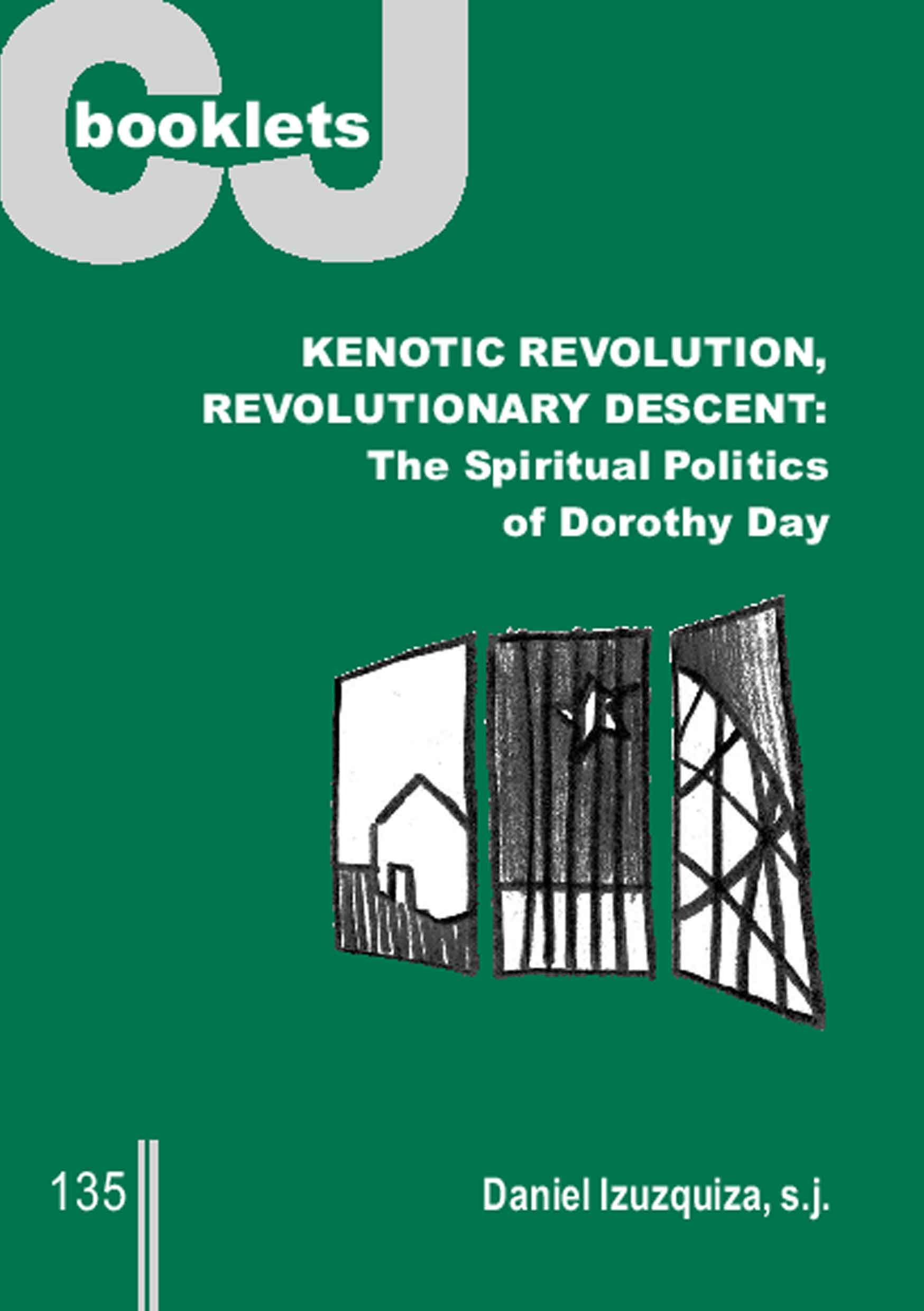
Dorothy Day is perhaps the most important figure in twentieth century North American Catholicism.A layperson, a mother, a grandmother, a worker, a revolutionary and a deeply religious woman, Dorothy offers us a new way of life for these difficult times at the start of the twenty-first century.

Morning, 9h to 14h
(from monday to friday)
Afternoon, 16h to 19h
(tuesday and thursday)