Join Us
Sign up to stay informed of the latest news from Cristianime i Justícia.
The sociologist Rafael Diaz Salazar offers to us in "Towards Post-capitalism" an essay that attempts to shed light fin order to orient us as we transition into post-capitalism. He does it by suggesting a dialogue between cultures of faith and justice that are nourished by different sources but who desire to learn from one another. The booklet covers the dialogue among Christians, Marxists and eco-socialists and, as the author himself explains, it is inserted into the proposal of Pope Francis concerning the culture of the encounter between persons of good will who have as their common goal the emancipation of the impoverished and of ecology.
Everyone is aware that the market, as a mechanism for the distribution of resources, has affected several areas of our society. From its influence on how we care for children and elderly people to the fields of education and health, there is a general sense that the expansion of the market is difficult to stop. This situation was already predicted in the middle of the last century by Karl Polanyi who warned of the social consequences of this increasing commodification. We will be looking over his work in the course of this booklet, in order to help us understand how far our lives have been affected by the commodification of goods such as work, housing and money itself.
What can we say to close out the year that would not sound banal? How do we choose words that avoid falling into discouragement or nihilism? How do we sustain hope? Faced with this avalanche of reality, we cannot remain self-contained. We just cannot. Without a doubt, it is incumbent upon us to analyze reality, to try to comprehend it, to inform ourselves in order to know what part of comes closest to us, and, above all, to allow ourselves to be moved by it. All of that requires a willingness and effort, but escape is not possible nor is any respite that would come from avoidance or immobility.
The trip made by food to our tables and to our garbage bins (if we don’t eat it), does not take place now in an isolated manner. We should understand that our relationship with food and the wasting of food affects the lives of the people of our planer, both of those who go hungry and of those who are poisoned by what we throw away. For that reason, the wasting of food falls into the category of sacrilege and finding a solution is turned into a question that affects not only the economy and health, but also religious and spiritual life. That is what is explained to us in this Pamphlet. The authors are members of the Higher Education for Social Transformation Project (HEST), promoted by the Conference of Jesuit Provincials of Europe (JCEP) and the Kircher Network.
Growing inequality and the corruption of leaders have split our society apart. Neoliberalism has become an intolerable ideology for the majority of people. For some that is because they suffer its consequences in their own lives. For others it is because the ideology subtly reduces them to individual consumers whose only value is being interchangeable numbers instead of persons. This is causing a great sense of unease throughout the world. In spite of this reality, the framework that we propose chooses hope, a hope based on the conviction that it is necessary to forge new bonds. This is our challenge as we begin a new year.
Cristianismo y Justicia ends the year posting a reflection. This time we alert about the way our society is facing these disconcerting moments, feeding authoritarian populism and reinforcing economic protectionism. Given this situation, we wonder whether we will be capable of building new global consensus that seek the common good.
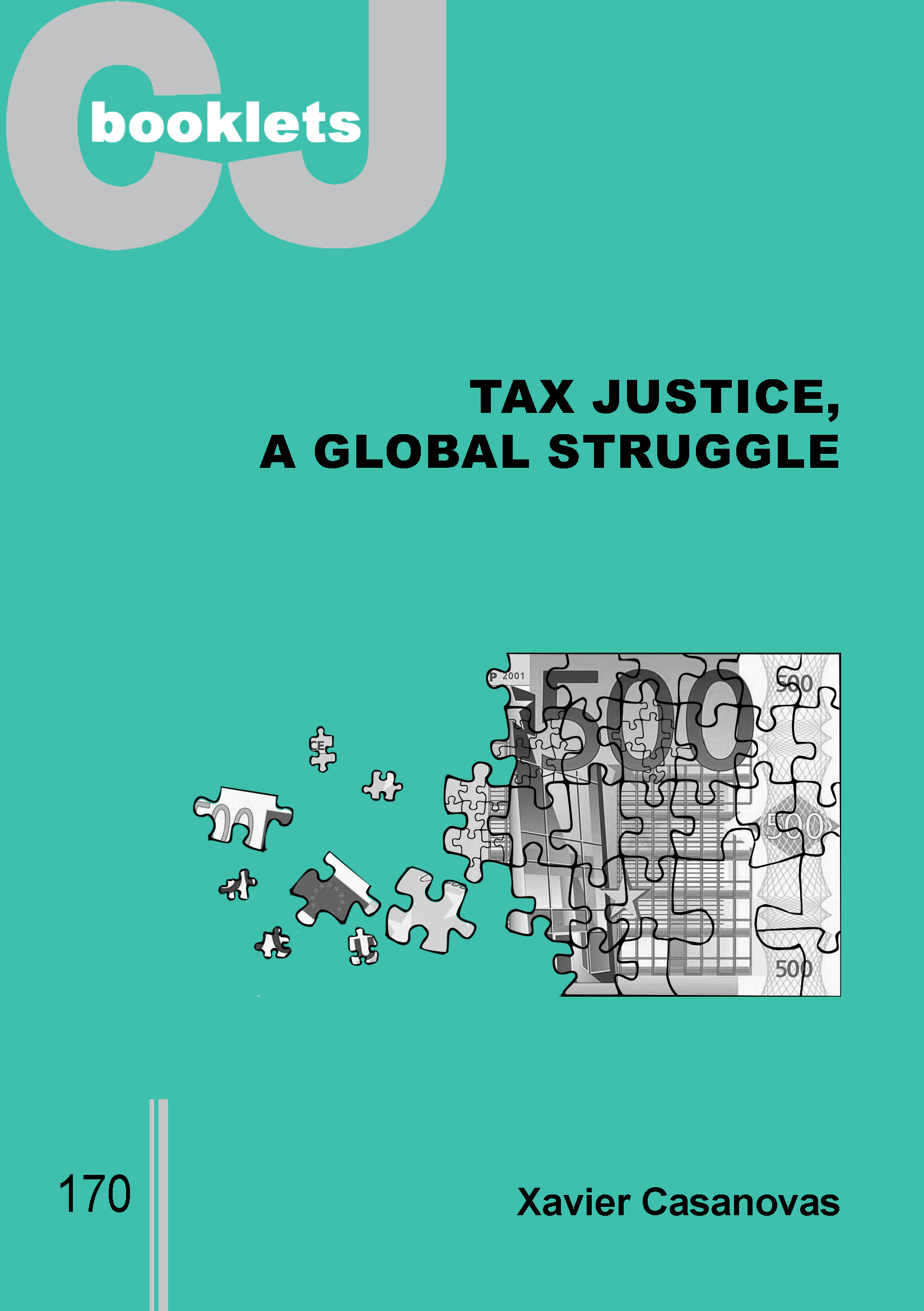
When we speak about government finance and taxes, we are confronted with a lot of questions: do we pay too many taxes? are they really put to good use? could we save on them? does it make sense for me to pay taxes when there is so much government corruption? For a long time the question of tax policy has been left out of political and social debate. Only in recent years, with the impact of economic crisis and globalization, are we again focusing on this question that is crucial for maintaining our welfare states. The debate about tax policy leads us to a further discussion about what model of society we desire and how we want to finance it. After 27 years Cristianisme i Justícia wants to address once again the tensions and the questions involved in creating a just fiscal system, one that fosters social solidarity. Such a system is an essential element in the fight against inequality.
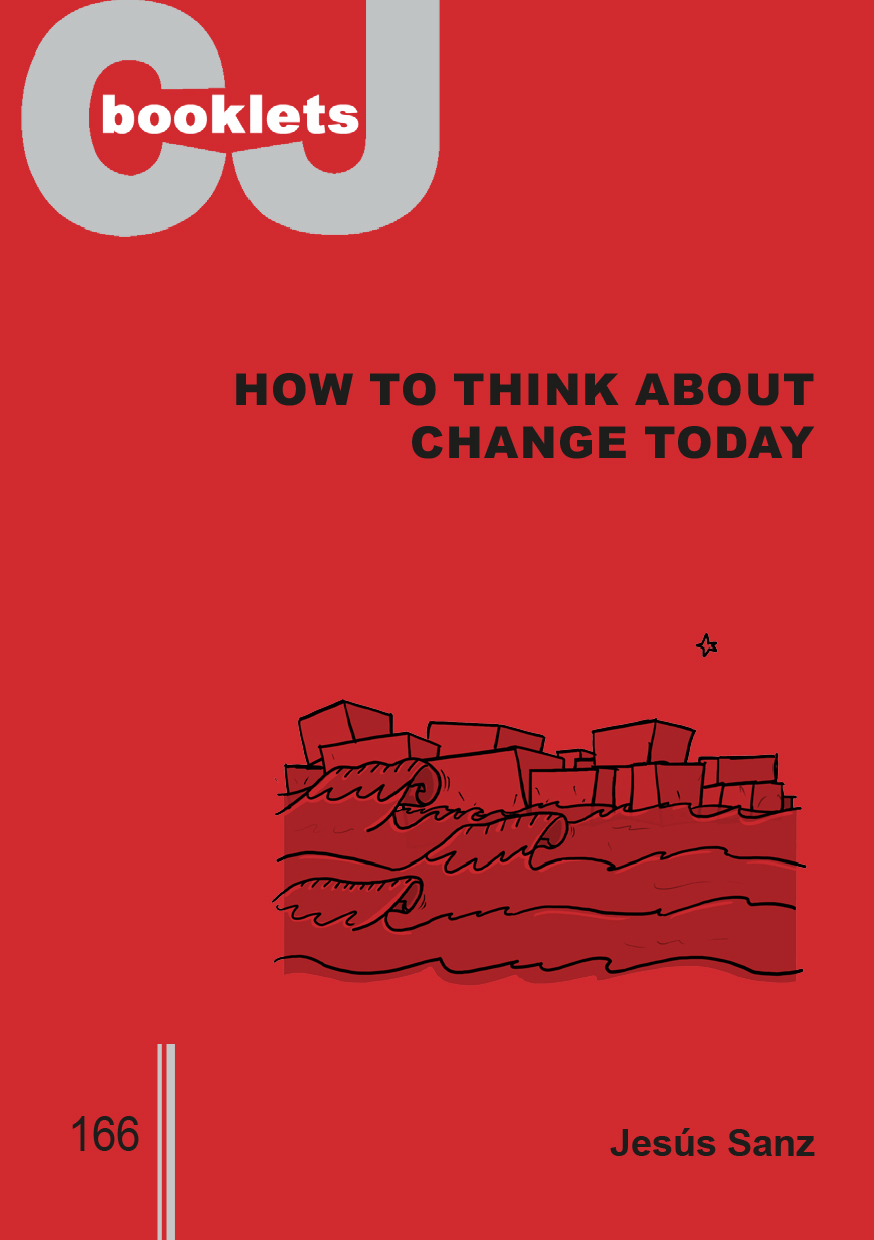
Change and social transformation, addressed form a polyhedral point of view, are the central issues of this booklet.
In a time where it seems the course of history is accelerating, we reflect on the present time drawing from some of the most relevant political events in the last years; we make an approach to the notions of change and transformation and, finally, we take a closer look to some of the areas from which we can work for social change and transformation, attempting to start from a hopeful gaze over reality although this is not always easy.
A booklet which, on a personal basis, seeks to inspire and encourage others to work from their everyday sphere, from both an individual and a collective dimension, and help to breed a new dignifying reality for all.
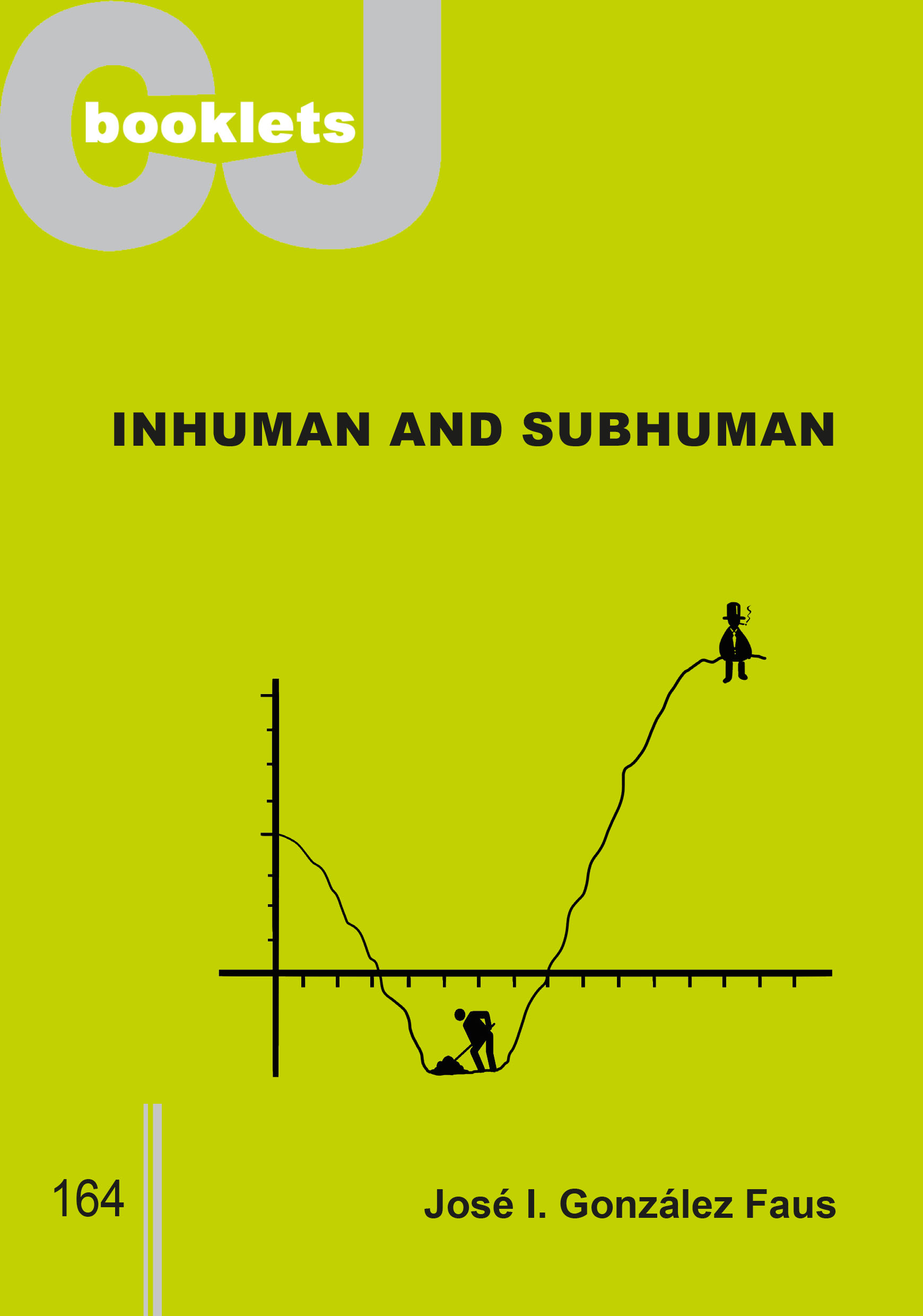
The economy is set in such a way that advantages are enjoyed by a minority of privileged whilst the inconvenients affect a mayority of desperate people. Thus, the privileged get dehumanised because they are only acquainted with ‘exchange values’; and what makes us really human (reason, equality and solidarity) are not ‘exchange values’ but values of another type. And so, the empoverished also get dehumanised because they live in a constant stroke to avoid drowning in the inmense sea of material needs. Taking as a reference Varoufakis’ book, “Talking to my daughter about the economy. A brief history of capitalism”, González Faus reflects on the anthropological and theological consequences of the actual economic system.
The Transatlantic Trade and Investment Partnership (TTIP) is a free trade treaty which is being negotiated between the United States of America and the European Union since 2013. If you haven't heard about it yet, it is because the chief negotiators of the two regions have kept it a secret during the different stages of discussions. Thanks to a series of leaks, we have come to know a little about the dangers it presents for democracy and social rights, should it be approved.
Morning, 9h to 14h
(from monday to friday)
Afternoon, 16h to 19h
(tuesday and thursday)